
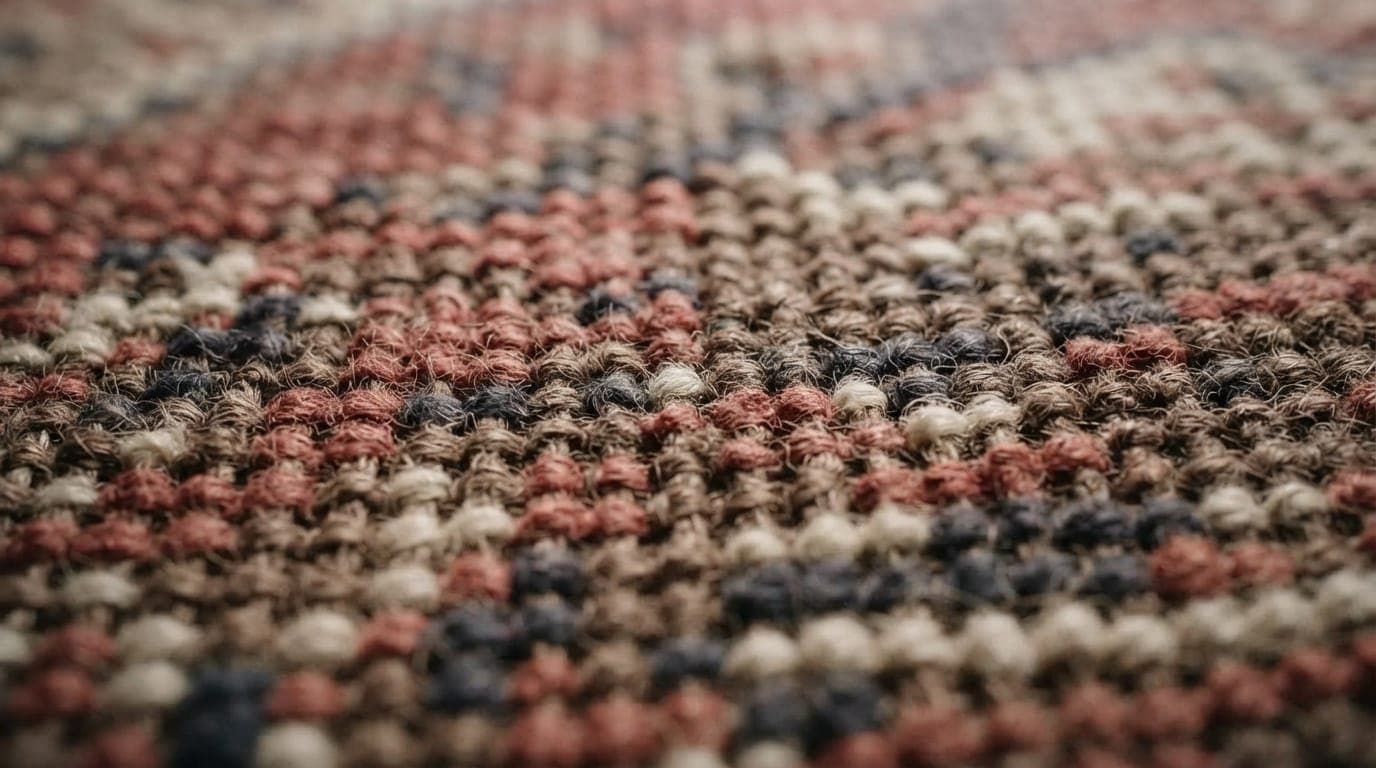
Construction
How a rug is made affects how it wears, how it can be repaired and what it should cost. We list construction only when we have verified it for that piece.
Materials
The pile is the surface you walk on; the foundation is the grid of warp and weft threads underneath. Wool pile is resilient and naturally resists soiling. Silk is finer and has more sheen but is more delicate. Cotton is common for foundations because it holds its shape. Where a rug uses a blend, we say so.
Knot density (KPSI)
KPSI is knots per square inch, counted on the back of a hand-knotted rug: knots along one inch horizontally, multiplied by knots along one inch vertically. It tells you how finely the design can be drawn. It is not a quality score on its own — a lower-density rug with good wool and dyes can outlast a finer one.
We show KPSI only with how we got it: measured (counted at a stated spot) or estimated (from a smaller sample), and where on the rug we sampled.
Condition
Every listing gives a condition grade and plain notes on anything visible: low pile, repairs, color variation, fringe wear. When there is something to see, we photograph it.
Origin
We state the country of manufacture for every rug, accurately. Design names describe the pattern, not where the rug was made.
Sizes by room
The shop groups rugs by size, from the measured dimensions on each listing. Measure the floor first, and in most rooms leave 12–18 inches of bare floor around the rug.
Care
Vacuum regularly without a beater bar, and never over the fringe. Rotate the rug every 6–12 months for even wear and light. Use a rug pad. Blot spills with water — no chemical cleaners — and leave deep cleaning to a rug specialist. To store, roll pile-in, wrap in breathable cloth and keep dry.